
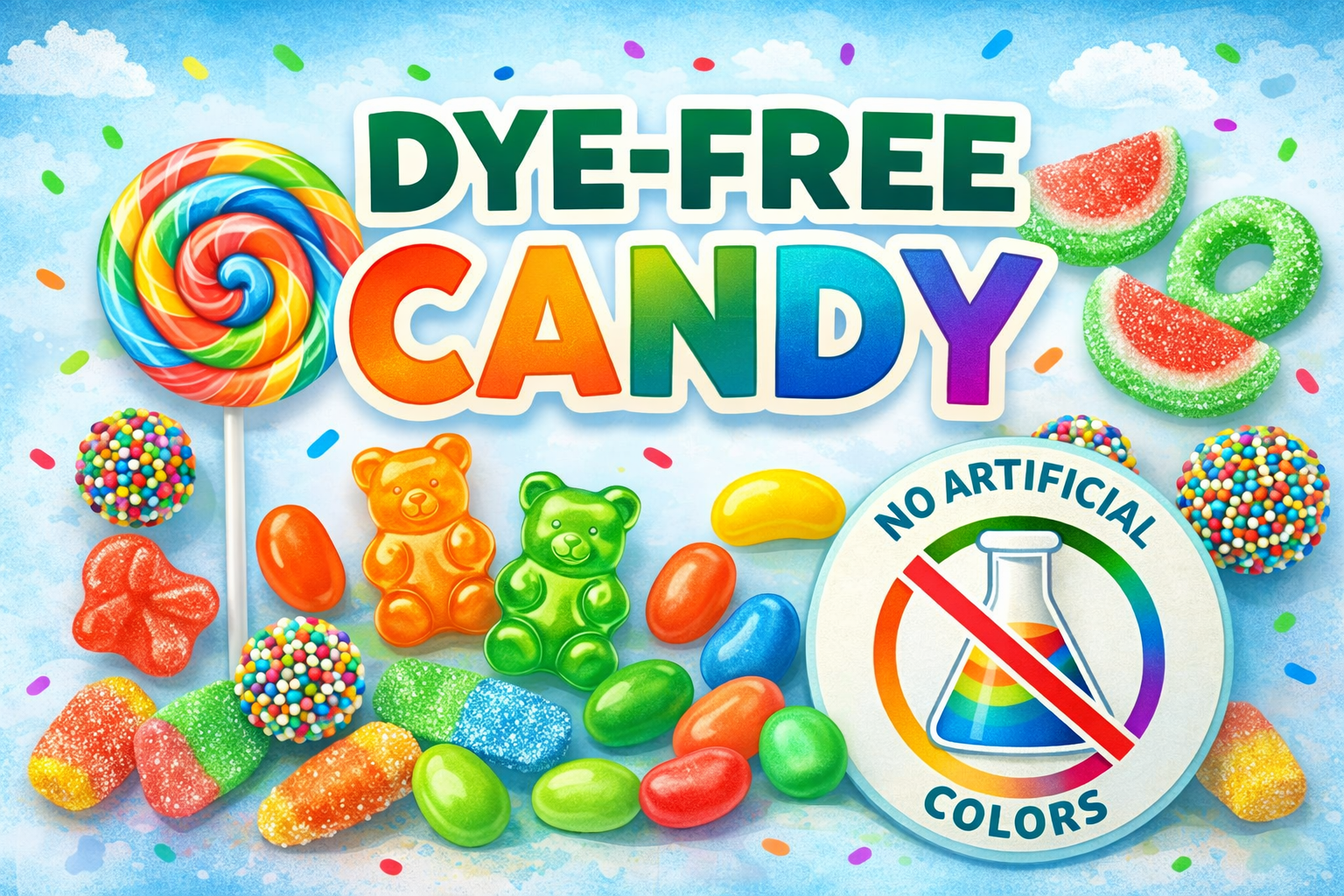
Candy is one of the most popular treats for children and adults. However, many candies contain artificial food dyes that give them bright colors. In recent years, more people are looking for healthier options, and this is where dye-free candy becomes popular.
Dye-free candy is candy made without artificial color additives. Instead of synthetic dyes, these candies often use natural ingredients or no coloring at all. Many parents and health-conscious consumers prefer dye-free candy because it may reduce exposure to artificial chemicals.
In this article, we will explain what dye- is, why people choose it, and some examples of options.
1. What Is Dye-Free Candy?
Dye-free candy is candy that does not contain artificial food coloring such as Red 40, Yellow 5, Blue 1, or other synthetic dyes. These dyes are commonly used in many candies to make them look bright and attractive.
Instead of artificial dyes, dye-free candy may use:
- Natural colors from fruits or vegetables
- No coloring at all
- Plant-based coloring ingredients
This makes the candy a more natural option for people who want to avoid artificial additives.
2. Why Some People Avoid Artificial Food Dyes
Artificial food dyes are approved for use in many countries, but some people prefer to avoid them for personal or health reasons Dye-free candy.
Also Read:My Winona Health
2.1 Concerns About Children’s Behavior
Some studies suggest that artificial dyes may affect behavior in certain children Dye-free candy. Parents sometimes notice increased hyperactivity after consuming foods with artificial coloring.
Because of this, many families choose dye-free candy as a safer alternative.
2.2 Allergies or Sensitivities
Some individuals may experience reactions such as headaches, skin irritation, or allergies when consuming foods with artificial dyes.
Choosing dye-free candy can help reduce these reactions.
2.3 Preference for Natural Ingredients
Many people today prefer foods made with simple and natural ingredients. Dye-free candy fits well with this lifestyle because it avoids synthetic chemicals.
3. Common Artificial Dyes Found in Candy
To understand dye-free candy better, it helps to know the common artificial dyes used in regular candy.
Some of the most common dyes include:
- Red 40
- Yellow 5
- Yellow 6
- Blue 1
- Blue 2
These dyes are used to create bright colors in candy such as red gummies, blue lollipops, and colorful jelly beans.
Dye-free candy avoids these additives.
4. Natural Coloring Alternatives in Candy
Some candy manufacturers use natural sources for coloring instead of artificial dyes Dye-free candy.
Natural coloring ingredients may include:
- Beet juice for red color
- Turmeric for yellow color
- Carrot juice for orange color
- Spirulina for blue or green color
These natural ingredients help give candy color while keeping the ingredients more natural Dye-free candy.
5. Examples of Dye-Free Candy
Many companies now produce dye-free candy for people who want healthier options. Some common examples include:
- Natural gummy candies
- Organic fruit chews
- Chocolate candies without artificial coloring
- Honey-based sweets
- Hard candies made with natural flavors
These candies may still be sweet and enjoyable while avoiding artificial dyes.
6. Benefits of Dye-Free Candy
Choosing dye-free candy offers several benefits.
6.1 Fewer Artificial Ingredients
Dye-free candy usually contains fewer synthetic chemicals, which many people prefer.
6.2 Better for Sensitive Individuals
People who are sensitive to food Dye-free candy dyes may feel better when eating candy without artificial coloring.
6.3 More Natural Products
Dye-free candy often uses natural flavors and ingredients, making it a better option for health-conscious consumers.
7. Tips for Choosing Dye-Free Candy
If you want to buy dye-free candy, there are some easy tips to follow.
7.1 Read Ingredient Labels
Always check the ingredient list Dye-free candy. Avoid products that include artificial dyes like Red 40 or Yellow 5.
7.2 Choose Organic Candy
Organic candy often avoids Dye-free candy artificial coloring and uses natural ingredients.
7.3 Look for Natural Brands
Some brands specialize in Dye-free candy natural or dye-free sweets, making them easier to find.
7.4 Choose Simple Candies
Chocolate, caramel, and honey candies Dye-free candy are often dye-free because they do not need artificial colors.
8. The Growing Demand for Dye-Free Candy
In recent years, the demand for dye-free candy has increased. Many consumers are becoming more aware of what ingredients are in their food.
Parents especially prefer dye-free options for children’s snacks and celebrations Dye-free candy.
Because of this demand, many candy companies are now creating natural and dye-free products.
Conclusion
Dye-free candy is becoming a popular choice for people who want to avoid artificial food dyes. These candies are made without synthetic coloring and often use natural ingredients instead.
Many people choose dye-free candy because they want healthier snacks, fewer artificial additives, and more natural food options.
As consumer awareness grows,will likely continue to become more available in stores and online. Choosing dye-free candy can be a simple way to enjoy sweets while making healthier food choices.
Frequently Asked Questions (FAQs)
- What is dye-free candy?
Dye-free candy is candy that does not contain artificial food coloring such as Red 40, Yellow 5, or Blue 1.
2.Is dye-free candy healthier?
Dye-free candy may be considered a better option because it avoids artificial dyes, but it is still a sweet treat and should be eaten in moderation.
3.Does dye-free candy have natural colors?
Some dye-free candies use natural colors from fruits and vegetables, while others have no added coloring.
4.Why do parents prefer dye-free candy?
Many parents choose dye-free candy because they want to avoid artificial additives that may affect children.
5.Where can you buy dye-free candy?
Dye-free candy can be found in health food stores, organic markets, and online shops.