
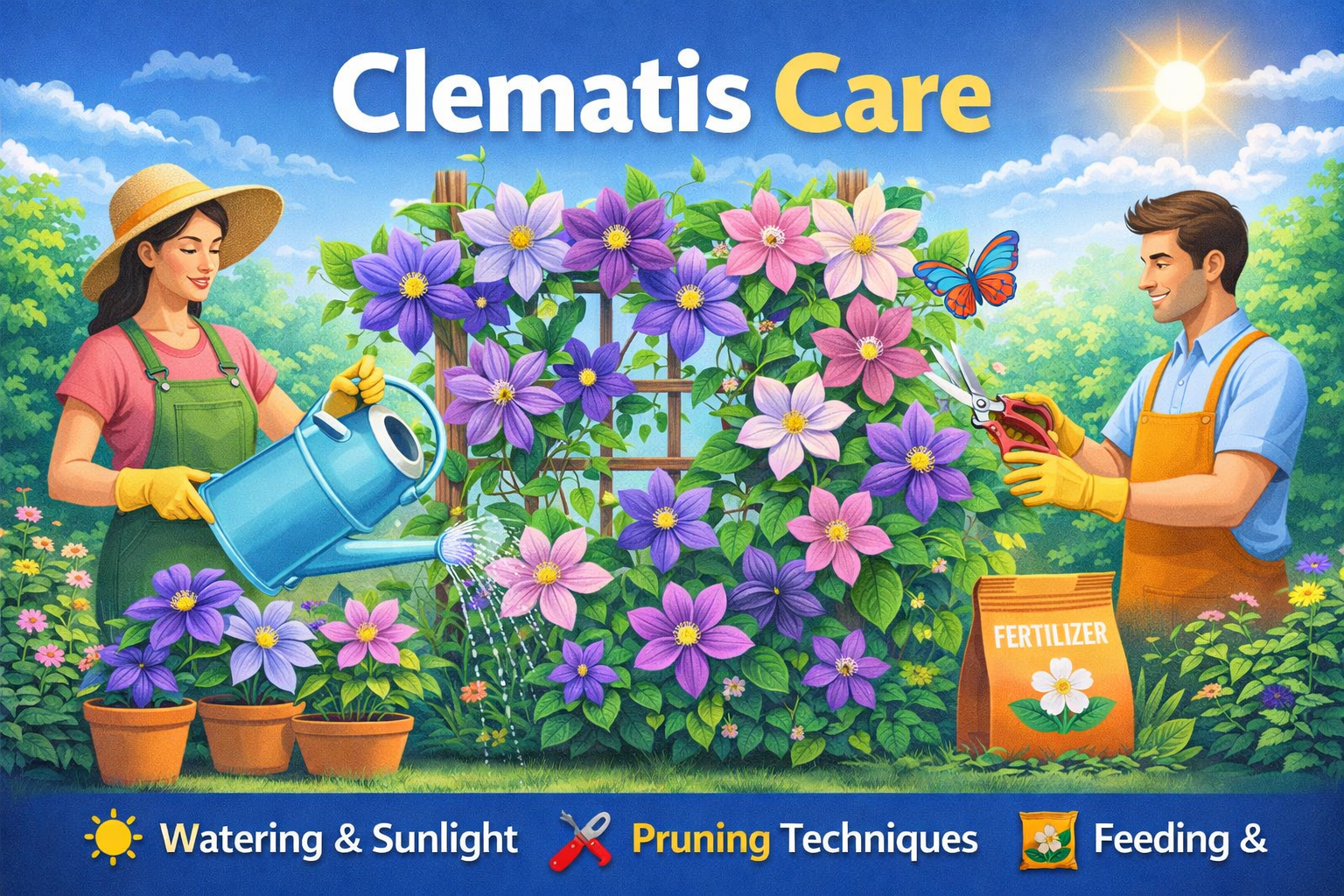
Introduction
Clematis is a popular flowering plant known for its beautiful and colorful blooms clematis care. Clematis is often used to decorate gardens, fences, and trellises. It is easy to grow, but it does need proper care to thrive.
In this article, we will guide you step by step on how to take care of clematis, including planting clematis care, watering, pruning, and common problems. Everything is explained in simple English so that even beginners can grow healthy clematis plants.
1. Understanding Clematis
Clematis is a climbing plant that belongs to the buttercup family. There are many types of clematis, including clematis care:
- Large-flowered hybrids – produce big, showy blooms
- Small-flowered varieties – smaller flowers, but bloom longer
- Evergreen clematis—keeps leaves all year round
- Deciduous clematis—loses leaves in winter
Knowing the type of clematis you have clematis care is important because care can differ slightly for each type.
2. Planting Clematis
Choosing the Right Spot clematis care
Clematis likes sunlight but prefers its roots to be cool clematis care. The ideal spot should have:
- Well-draining soil
- Space to climb or spread
Also Read:MABS login
Planting Steps clematis care
- Mix compost or organic matter into the soil
- Water the plant well after planting
Tip: Planting clematis near a wall clematis care or trellis gives it support for climbing.
3. Watering Clematis
Clematis likes moist soil but not waterlogged. Follow these tips:
- Water 1–2 times per week in dry weather
- Keep the roots cool by adding mulch clematis care
- Avoid wetting the leaves too much to prevent disease.
4. Fertilizing Clematis clematis care
Clematis needs nutrients to bloom well clematis care. Use these tips:
- Apply slow-release fertilizer in spring
- Use liquid fertilizer every 4–6 weeks during the growing season
- Avoid too much nitrogen, as it can produce more leaves but fewer flowers
A healthy feeding schedule helps the plant produce big, colorful blooms clematis care.
5. Pruning Clematis
Pruning keeps clematis healthy and encourages flowering. There are three main groups of clematis, and each clematis care needs different pruning:
Group 1 – Early-flowering
- Prune after flowering
- Only remove dead or weak stems
- clematis care
Group 2 – Large-flowered hybrids
- Prune lightly in early spring
- Remove weak stems and shorten others by one-third clematis care
Group 3 – Late-flowering
- Cut all stems to about 30–60 cm above the ground in late winter
- New growth will produce flowers clematis care
Pruning at the right time ensures more flowers next season.
6. Supporting Clematis clematis care
Clematis is a climbing plant, so it needs support to grow vertically clematis care.
- Use trellises, fences, or pergolas
- Tie young stems gently with soft string
- Avoid tying too tightly to prevent damage
Proper support allows the plant to grow healthy and show off its flowers clematis care.
7. Common Problems and Solutions
Clematis Wilt clematis care
- Sudden wilting of stems
- Remove affected stems and clematis care dispose of them.
- Plant in well-drained soil
Aphids clematis care
- Small insects on new growth
- Spray with insecticidal soap or water
Powdery Mildew clematis care
- White powdery coating on leaves
- Remove affected leaves clematis care and improve air circulation
Regular checks and preventive care keep your clematis strong.
8. Mulching clematis
Mulching keeps roots cool and retains moisture clematis care. Use organic materials like
- Bark chips
- Compost
- Straw
Apply a 5–10 cm layer around the base but keep it away from the stem to prevent rot.
9. Propagating Clematis clematis care
You can grow new clematis clematis care plants using the following:
- Stem cuttings – take a young shoot, plant in moist soil, and wait for roots
- Layering – bend a low stem to the soil and cover it until it grows roots
- Seeds – take longer to grow but can create new varieties
Propagation clematis care is a fun way to expand your garden.
10. Seasonal Care
Spring clematis care
- Apply fertilizer
- Prune as needed
- Check for new growth
- clematis care
Summer clematis care
- Water regularly
- Watch for pests and diseases
- Tie stems to supports
- clematis care
Autumn clematis care
- Mulch to protect roots from cold
- Remove dead leaves
- clematis care
Winter clematis care
- Prune late-flowering clematis
- Protect roots from frost with extra mulch.
Seasonal care helps clematis care clematis survive and bloom year after year.
Conclusion
Caring for clematis is simple if you follow the right steps. Planting in the correct spot, watering properly, feeding, pruning, and supporting your plant will ensure clematis care healthy growth and beautiful flowers. With attention and patience, your clematis can brighten your garden for years.
Clematis is not just a climbing plant; it is a symbol of beauty and elegance clematis care. Taking care of it properly will give you a rewarding and colorful garden.
FAQs About Clematis Care
- How often should I water clematis?
Water 1–2 times per week, more in hot, dry weather.
- When should I prune clematis?
It depends on the group: early-flowering after bloom, large-flowered hybrids lightly in spring, and late-flowering in late winter.
- What kind of soil does clematis need?
Well-draining soil with organic matter is ideal.
- Can clematis grow in full sun?
Yes, but the roots should be shaded or mulched to keep them cool.
- How do I prevent clematis wilt?
Plant in well-drained soil, remove affected stems, and keep the plant healthy.
- Can clematis climb without support?
No, clematis needs trellises, fences, or other supports to grow vertically.