
1. Introduction to the Health Triangle
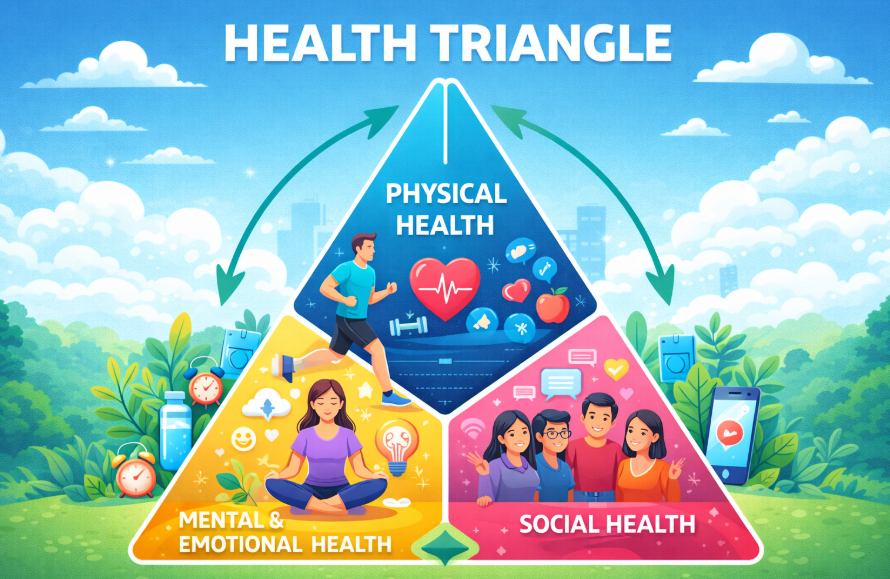
The Health Triangle is a simple model that helps people understand what it means to live a healthy life. It explains that good health is not only about the body but also about the mind and relationships. The health triangle has three sides: physical health, mental health, and social health.
When all three sides are balanced, a person can live a happier and healthier life. If one side of the triangle becomes weak, it can affect the other parts as well. That is why it is important to take care of all aspects of health, not just one.
The health triangle is commonly taught in schools and health education programs because it helps people understand the importance of a balanced lifestyle.
2. What Is the Health Triangle?
The Health Triangle is a way to describe the three main areas of health. Each side of the triangle represents a different type of health that contributes to overall well-being.
These three parts work together to support a healthy and balanced life. If one part is ignored, it can create problems in other areas of life.
- Mental and emotional health
- Social health
Understanding these areas helps people make better lifestyle choices.
Also Read:renas tech
3. Physical Health
It includes taking care of your body through good habits such as exercise, healthy eating, and enough sleep health triangle.
3.1 Importance of Exercise
Regular exercise keeps the body strong and helps maintain a healthy weight health triangle. Activities like walking, running, cycling, or playing sports improve heart health and muscle strength.
3.2 Healthy Diet
Eating balanced meals with fruits, vegetables, proteins, and whole grains provides the body with essential nutrients health triangle.
3.3 Adequate Sleep
Sleep is important for body recovery and energy. Most adults need about 7–9 hours of sleep every night health triangle.
Maintaining good physical health helps prevent illnesses such as heart disease and type 2 diabetes.
4. Mental and Emotional Health
Mental and emotional health focuses on how a person thinks, feels, and handles stress. It is an important part of the health triangle because a healthy mind helps people make good decisions and manage challenges.
4.1 Managing Stress
Learning how to manage stress through relaxation, hobbies, or meditation can improve mental health health triangle.
4.2 Positive Thinking
A positive attitude can help people face difficulties and stay motivated health triangle.
4.3 Emotional Awareness
Understanding and expressing emotions in a healthy way is important for mental well-being health triangle.
When mental health is strong, people can cope better with daily challenges and maintain a positive outlook on life.
5. Social Health
Social health refers to how people interact and build relationships with others health triangle. Humans are social beings, so healthy relationships are important for emotional support and happiness.
5.1 Strong Relationships
Spending time with family and friends helps build trust and support health triangle.
5.2 Communication Skills
Good communication allows people to express their thoughts and feelings clearly health triangle.
5.3 Community Involvement
Participating in community activities or helping others can strengthen social connections health triangle.
Strong social health helps people feel supported and less isolated.
6. Why Balance in the Health Triangle Is Important
Balance is the key idea of the health triangle. If one side becomes weak, the other parts may also suffer.
For example:
- Stress and mental health problems can impact physical health.
- Lack of social connections can lead to emotional difficulties.
By maintaining balance between physical, mental, and social health, people can improve their overall quality of life health triangle.
7. Tips to Maintain a Healthy Triangle
There are many simple steps people can take to keep their health triangle balanced.
7.1 Stay Active
Regular physical activity keeps the body strong and improves mood health triangle.
7.2 Practice Relaxation
Activities such as deep breathing, meditation, or reading can reduce stress health triangle.
7.3 Build Healthy Relationships
Spend time with supportive friends and family members health triangle.
7.4 Eat Nutritious Foods
A balanced diet helps the body and mind function properly health triangle.
7.5 Maintain a Healthy Routine
Having a daily routine with enough sleep, work, and relaxation helps maintain overall balance health triangle.
These habits support all three sides of the health triangle.
8. Teaching the Health Triangle to Young People
Schools often teach the Health Triangle to students because it is an easy way to explain health and wellness. It helps young people understand that being healthy involves more than just avoiding illness.
Students learn how exercise, emotional well-being, and friendships all play important roles in their lives health triangle.
By learning these ideas early, people can develop healthy habits that last throughout their lifetime.
Conclusion
The Health Triangle is a simple but powerful way to understand health. It shows that physical health, mental health, and social health are all connected.
Maintaining balance between these three areas helps people live happier, healthier lives. By exercising regularly, managing stress, and building strong relationships, anyone can strengthen their health triangle.
A balanced life leads to better well-being, stronger relationships, and improved overall happiness.
Frequently Asked Questions (FAQs)
- What is the health triangle?
The Health Triangle is a model that explains health through three parts: physical, mental, and social health.
- What are the three sides of the health triangle?
The three sides are physical health, mental/emotional health, and social health.
- Why is balance important in the health triangle?
Balance ensures that all areas of health support each other, leading to overall well-being.
- How can I improve my physical health?
You can improve it by exercising regularly, eating healthy foods, and getting enough sleep.
- How does social health affect overall health?
Strong relationships and social support can improve emotional well-being and reduce stress.