
Introduction
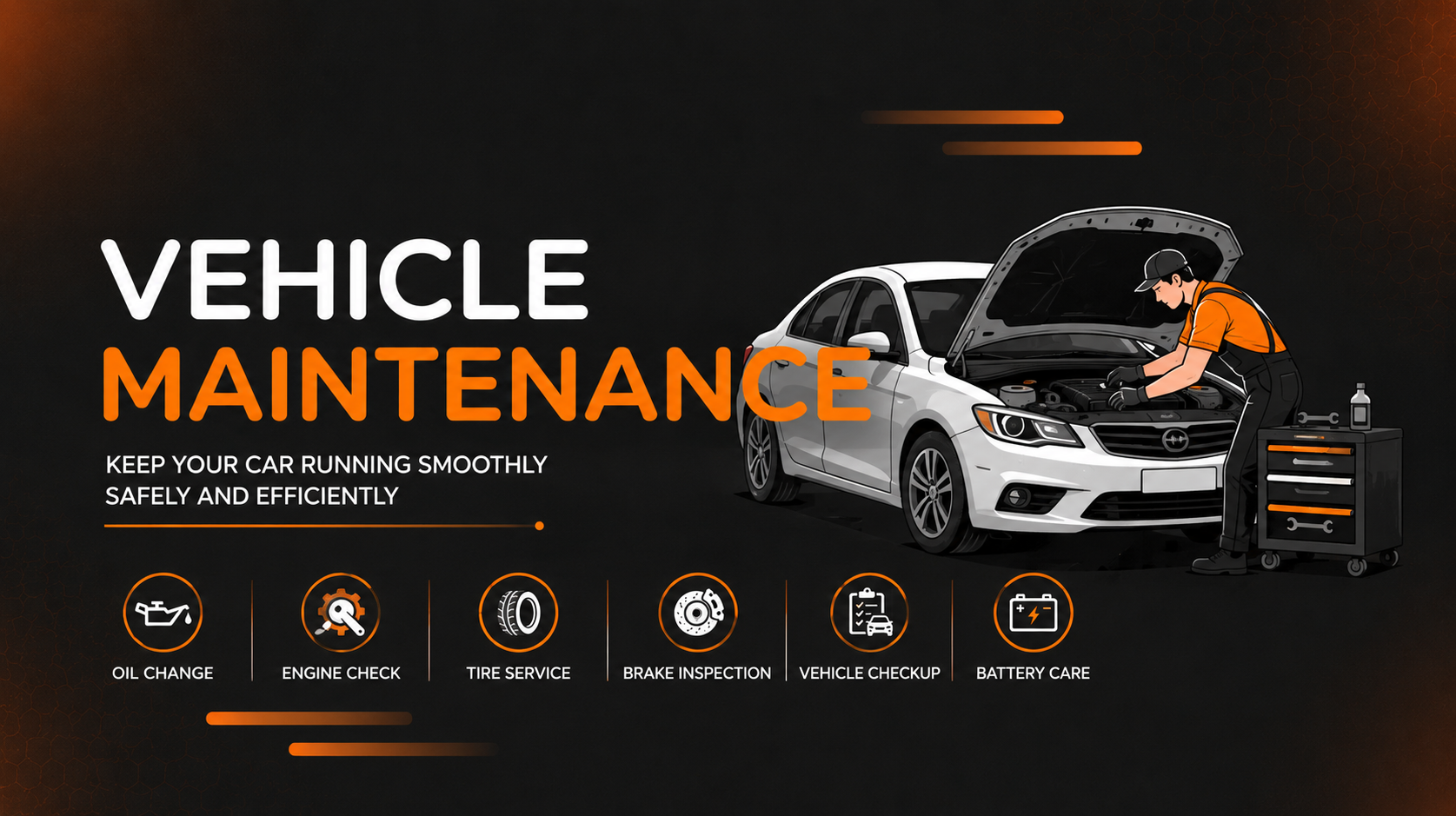
Vehicle maintenance is the process of checking and caring for a vehicle regularly to keep it in good condition. Every vehicle needs proper maintenance to work safely and efficiently. Cars, trucks, motorcycles, and other vehicles have many moving parts that can wear out over time. Regular maintenance helps prevent breakdowns, improves performance, and increases the life of the vehicle.
Many people only visit a mechanic when their vehicle stops working. However, proper maintenance can help avoid costly repairs and dangerous situations. A well-maintained vehicle is safer, cleaner, and more reliable for daily use.
This article explains the importance of vehicle maintenance, different maintenance tasks, and simple tips every vehicle owner should follow.
What Is Vehicle Maintenance?
Vehicle maintenance means inspecting, repairing, and servicing a vehicle to make sure it works correctly. It includes both small and major tasks that keep the vehicle running smoothly.
Some common maintenance activities include:
- Changing engine oil
- Checking tire pressure
- Inspecting brakes
- Replacing filters
- Testing the battery
- Checking coolant levels
- Inspecting lights and signals
Regular maintenance helps detect problems early before they become serious.
Why Vehicle Maintenance Is Important
Vehicle maintenance is important for many reasons. It keeps the vehicle safe, improves fuel efficiency, and saves money.
Also Read:Car service
Improves Safety
A properly maintained vehicle is safer to drive. Good brakes, tires, and lights reduce the risk of accidents.
Extends Vehicle Life
Regular servicing helps important parts last longer.
Saves Money
Fixing small issues early can prevent expensive repairs later.
Better Fuel Efficiency
Well-maintained engines use fuel more efficiently.
Reduces Pollution
A clean and healthy engine produces fewer harmful emissions.
Types of Vehicle Maintenance
Different maintenance tasks are needed at different times.
Preventive Maintenance
Preventive maintenance means checking and servicing the vehicle before problems occur. This is the most important type of maintenance.
Examples include:
- Oil changes
- Tire rotation
- Brake inspections
Corrective Maintenance
Corrective maintenance happens when a problem is already present and needs repair.
Examples include:
- Replacing broken parts
- Repairing engine problems
- Fixing damaged brakes
Emergency Maintenance
This type of maintenance happens during sudden breakdowns or accidents.
Important Parts of Vehicle Maintenance
Engine Maintenance
The engine is the heart of the vehicle. Regular oil changes and filter replacements keep it healthy.
Tire Maintenance
Tires should be checked for air pressure, wear, and damage. Good tires improve safety and fuel economy.
Brake Maintenance
Brakes must work properly for safe driving. Brake pads and brake fluid should be inspected regularly.
Battery Maintenance
The battery provides electrical power to the vehicle. Cleaning battery terminals and testing battery strength are important.
Fluid Checks
Vehicles use different fluids, such as
- Engine oil
- Coolant
- Brake fluid
- Transmission fluid
Low or dirty fluids can damage the vehicle.
Signs Your Vehicle Needs Maintenance
Vehicles often show warning signs when maintenance is required.
Warning Lights
Dashboard warning lights indicate possible problems.
Strange Noises
Unusual sounds from the engine, brakes, or suspension should not be ignored.
Poor Fuel Economy
Using more fuel than normal may mean the engine needs servicing.
Vibrations While Driving
Shaking or vibrations may indicate tire or alignment problems.
Difficulty Starting
Hard starting can be caused by battery or engine issues.
Benefits of Regular Vehicle Maintenance
Increased Reliability
Regularly maintained vehicles are less likely to break down.
Better Driving Experience
Smooth engines and good brakes make driving more comfortable.
Higher Resale Value
Vehicles with proper maintenance records often sell at better prices.
Lower Repair Costs
Small repairs are usually cheaper than major repairs.
Improved Road Safety
A safe vehicle protects the driver, passengers, and other road users.
Simple Vehicle Maintenance Tips
Check Tire Pressure Regularly
Correct tire pressure improves handling and fuel efficiency.
Change Engine Oil on Time
Old oil can damage the engine.
Keep the Vehicle Clean
Washing removes dirt and protects the paint from rust.
Inspect Lights
Make sure headlights, brake lights, and indicators work properly.
Follow the Service Schedule
Always follow the maintenance schedule recommended by the manufacturer.
Common Vehicle Maintenance Mistakes
Ignoring Warning Lights
Many drivers continue driving even when warning lights appear.
Skipping Oil Changes
Old oil can reduce engine performance and cause damage.
Using Poor-Quality Parts
Cheap or low-quality parts may not last long.
Neglecting Tire Care
Worn tires can be dangerous, especially during bad weather.
Choosing a Good Maintenance Workshop
A reliable workshop is important for quality service.
Experienced Mechanics
Choose mechanics with proper training and experience.
Honest Pricing
Good workshops provide fair prices and clear information.
Positive Customer Reviews
Reviews can help identify trusted service centers.
Quality Parts
Always use genuine or high-quality replacement parts.
The Future of Vehicle Maintenance
Modern vehicles now use advanced technology and computer systems. Mechanics use digital tools to find problems quickly. Electric vehicles are also becoming more popular and require different maintenance compared to traditional fuel vehicles.
In the future, vehicle maintenance may become more automated and efficient with the help of smart technology and artificial intelligence.
Conclusion
Vehicle maintenance is an important responsibility for every vehicle owner. Regular maintenance improves safety, performance, and fuel efficiency while reducing repair costs. A properly maintained vehicle lasts longer and provides a smoother driving experience.
Simple tasks such as oil changes, brake inspections, and tire checks can make a big difference. By following a regular maintenance schedule, drivers can avoid many problems and enjoy safe and reliable transportation.
Taking care of a vehicle today can save time, money, and stress in the future.
Frequently Asked Questions (FAQs)
1. What is vehicle maintenance?
Vehicle maintenance is the regular inspection and servicing of a vehicle to keep it working properly.
2. Why is vehicle maintenance important?
It improves safety, performance, fuel efficiency, and vehicle lifespan.
3. How often should a vehicle be serviced?
Most vehicles should be serviced every six months or according to the manufacturer’s schedule.
4. What happens during vehicle maintenance?
Mechanics check the engine, brakes, tires, battery, fluids, and other important parts.
5. Can maintenance prevent breakdowns?
Yes, regular maintenance helps detect problems early.