
Introduction
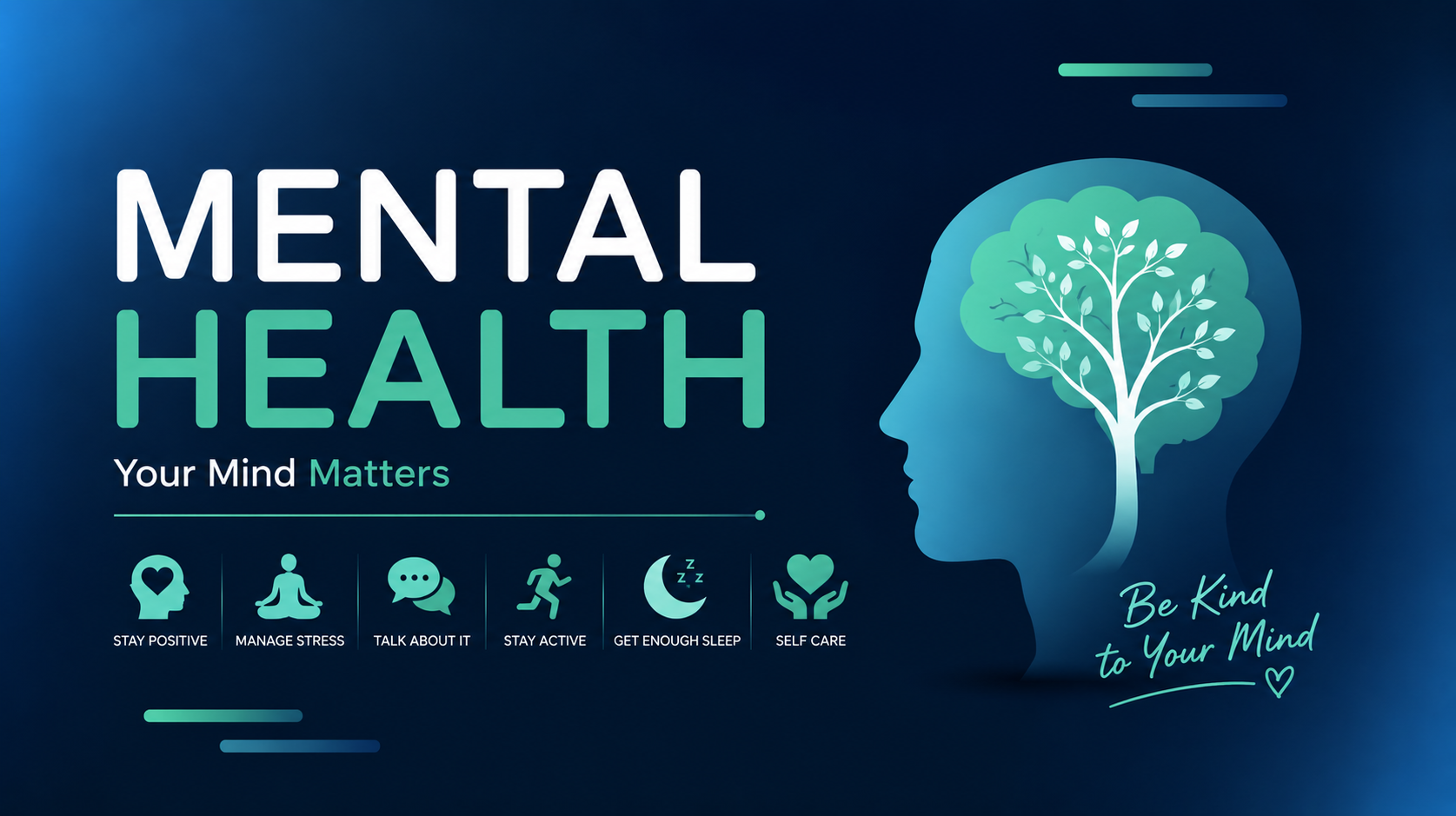
Mental health is about how we think, feel, and behave in our daily lives. It also affects how we handle stress, make decisions, and connect with other people. Good mental health helps us live a balanced and happy life.
In today’s busy world, mental health is just as important as physical health. Many people face stress from school, work, family problems, or financial pressure. If mental health is ignored, it can lead to serious conditions like depression or anxiety disorder.
Taking care of mental health is important for everyone, no matter the age.
1. What Is Mental Health?
Mental health refers to a person’s emotional and psychological well-being. It shows how a person thinks, feels, and acts in different situations.
Good mental health means the following:
- Feeling positive most of the time
- Handling stress in a healthy way
- Building strong relationships
- Making clear and good decisions
Poor mental health can cause sadness, confusion, stress, and problems in daily life.
2. Why Mental Health Is Important
Mental health is important because it affects every part of life.
Also Read:Vehicle maintenance
2.1 Improves Daily Life
When your mind is healthy, you can focus better on studies, work, and family life.
2.2 Builds Strong Relationships
Good mental health helps people communicate and understand others better.
2.3 Supports Physical Health
Mental and physical health are connected. Stress and anxiety can lead to headaches, tiredness, and weak immunity.
2.4 Increases Productivity
A healthy mind helps people work better and make fewer mistakes.
3. Causes of Poor Mental Health
Many factors can affect mental health. Some common causes include:
3.1 Stress
Work pressure, exams, or personal problems can cause stress.
3.2 Trauma
Bad experiences like accidents, loss of loved ones, or abuse can affect the mind deeply.
3.3 Loneliness
Feeling alone or isolated can lead to sadness and depression.
3.4 Financial Problems
Money issues can create constant worry and anxiety.
3.5 Medical Conditions
Some diseases or long-term illnesses can also affect mental health.
4. Signs of Poor Mental Health
It is important to recognize early signs of mental health problems.
4.1 Constant Sadness
Feeling sad or empty for a long time.
4.2 Loss of Interest
Not enjoying activities that were once enjoyable.
4.3 Sleep Problems
Sleeping too much or too little.
4.4 Lack of Energy
Feeling tired all the time.
4.5 Difficulty Concentrating
Trouble focusing on work or studies.
5. Types of Mental Health Disorders
There are different types of mental health conditions.
5.1 Depression
Depression is a condition where a person feels very sad and hopeless and loses interest in life activities.
5.2 Anxiety Disorder
Anxiety disorder causes excessive worry, fear, and nervousness about everyday situations.
5.3 Stress Disorders
These occur when a person cannot handle pressure properly.
5.4 Bipolar Disorder
This condition causes extreme mood changes, from very happy to very sad.
6. How to Take Care of Mental Health
6.1 Talk About Your Feelings
Sharing your thoughts with friends or family helps reduce stress.
6.2 Exercise Regularly
Physical activity improves mood and reduces anxiety.
6.3 Eat Healthy Food
A balanced diet supports brain health.
6.4 Get Enough Sleep
Good sleep helps the mind relax and recover.
6.5 Avoid Negative Thoughts
Try to think positively and focus on solutions.
6.6 Take Breaks
Do not overload yourself with work or studies.
7. Role of Family and Friends
Family and friends play an important role in mental health.
7.1 Emotional Support
They provide comfort during hard times.
7.2 Encouragement
They motivate a person to stay strong.
7.3 Listening Ear
Sometimes, just talking helps reduce stress.
8. When to Seek Help
It is important to seek help if:
- Sadness lasts for a long time.
- Anxiety becomes uncontrollable
- Daily life is affected
- Thoughts of self-harm occur
Doctors, psychologists, and counselors can provide proper treatment and support.
9. Breaking the Stigma
Many people feel shy or afraid to talk about mental health. This is called stigma. It is important to understand that mental health problems are common and treatable.
Talking openly helps others feel safe and encourages them to seek help.
Conclusion
Mental health is a very important part of life. A healthy mind helps us live happily, think clearly, and build strong relationships. Problems like stress, anxiety, and depression can affect anyone, but they can be treated with care and support.
By taking care of our thoughts, emotions, and lifestyle, we can improve mental health. Families, friends, and society should work together to support people who are struggling.
Remember, taking care of your mind is just as important as taking care of your body.
Frequently Asked Questions (FAQs)
1. What is mental health?
Mental health is how we think, feel, and behave in daily life.
2. Why is mental health important?
It helps us live a happy, balanced, and productive life.
3. What causes mental health problems?
Stress, trauma, loneliness, and financial issues can cause problems.
4. Can mental health problems be treated?
Yes, with therapy, support, and sometimes medication.
5. What is depression?
Depression is a condition where a person feels very sad and loses interest in life.
6. What is anxiety disorder?
It is a condition where a person feels extreme worry and fear.
7. How can I improve my mental health?
Exercise, good sleep, healthy food, and talking to others can help.
8. When should I get help?
If sadness or stress affects daily life, it is important to seek help.